A press conference for the 47th World Congress of Vine and Wine and the OIV General Assembly was held on August 27 at the press briefing hall of China’s Ministry of Agriculture and Rural Affairs.
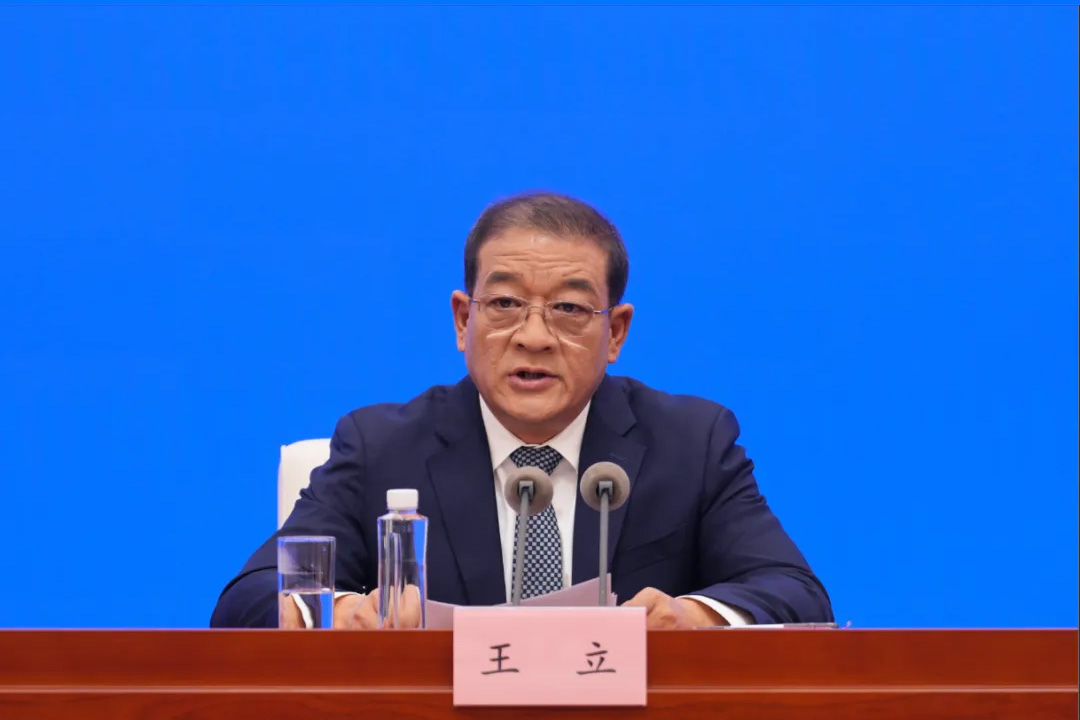
The Helan Mountain’s East Foothill Wine Region (HMEF Wine Region) within Ningxia Hui Autonomous Region has been recognized as a premium wine‑growing terroir by the International Organisation of Vine and Wine (OIV), said Wang Li, Vice‑Governor of Ningxia Hui Autonomous Region. During three official visits to Ningxia, President Xi Jinping delivered important guidance for the region’s wine industry, describing its development as one that has “overtaken competitors from behind and emerged as a dynamic rising force”. He also assigned Ningxia the key mission of enabling Chinese wine to “astonish the world”.
With expertise from the OIV and policy guidance from the Ministry of Agriculture and Rural Affairs and the Ministry of Industry and Information Technology, local authorities have pursued sustained, long‑term industrial development. Guided by the philosophy of “large‑scale terroir region, small‑scale wineries”, Ningxia is advancing along two core tracks: premium quality and product diversification. A dedicated department‑level agency has been established to build comprehensive systems spanning policy support, scientific and technological innovation, branding, marketing and talent development.
This progress has come despite a challenging period for China’s domestic wine industry, marked by sector‑wide headwinds and on-going market restructuring in recent years. Even so, Ningxia remains one of the country’s top wine regions by vineyard acreage, number of wineries, production volume and sales growth. It has served as an anchor of stability during a broader industry transformation – a track record that helped secure its bid to host the upcoming OIV Congress.
What sets Ningxia apart, however, are four core strengths.
1.Exceptional terroir, the foundation of premium wine
Situated along the famed 38°N viticultural belt, the HMEF Wine Region produces world‑class wines with a distinctive Oriental character. True to the saying that “great wine stems from great terroir”, this natural advantage lies at the heart of Ningxia’s wine brand identity and value proposition. With over 600,000 mu (40,000 hectares) of wine‑grape vineyards, the region now accounts for half of all estate‑bottled wines produced in China. More than 1,800 of its wines have earned international awards. Most notably, the Changyu Longyu Estate Long 12 Cabernet Sauvignon was named “King of Wines” at the 2025 Global Wine Masters, going head to head with iconic labels like Château Lafite Rothschild and Opus One.
2.Pilot regulatory frameworks aligning with global standards
Over 70 percent of Ningxia’s wine‑related technical standards and regulations are benchmarked against OIV specifications. The region has also achieved several nation firsts: China’s first special ordinance for wine‑region protection, its first dedicated wine quality‑testing center, and its first carbon‑credit transaction for wine‑grape vineyards. On this regulatory foundation, researchers have made tangible strides in grape germplasm, wine yeast development and smart winemaking technologies. Innovation extends to finished products and marketing as well. The region has rolled out low‑alcohol wines, rosés, sparkling wines and other youth‑focused offerings with fresh packaging, while omnichannel sales networks continue to expand.
For a region in northwest China, Ningxia operates with a distinctly global outlook and a firm commitment to international best practices. It has cultivated what is now widely known as the “Ningxia wine phenomenon”, a model that harmonizes industrial growth with ecological conservation, offering a practical, grassroots example of the Two Mountains Theory – the national philosophy that champions balanced development between the economy and the environment.
3.Cross‑sector integration driving transformative growth
Ningxia has long viewed wine as more than just a drink – it’s a lifestyle and a cultural aesthetic woven into the fabric of everyday life. Alongside the expansion of its wineries, the region has made significant ecological strides through desert rehabilitation and ecosystem restoration.
These environmental gains have laid a solid foundation for the growth of wine tourism. The Purple Avenue – a wine‑themed, multi‑functional, ecological corridor – links a network of industrial parks and tourist destinations across the region, where 130 distinctive wineries are scattered along the route. Cultural tourism hubs such as Dulaan Wine Town and Helan Mountain Villa Cluster come together to form cohesive travel itineraries. Visitors can take part in vine‑adoption programs, food‑and‑wine pairing sessions and immersive art‑themed activities. Winery tours, stargazing and sunset viewing have become increasingly popular lifestyle experiences for discerning travelers.
Building on its cultural and tourism strengths, Ningxia launched an initiative this year to bring wine‑themed experiences into both homes and commercial venues across the region, through events like the Youth Art Season and the “Million Glasses of Wine for Guests” campaign, held under the banner of “A Toast to Helan Mountain”.
4.Open international platforms – bridges to global markets
Ningxia is home to two state‑level platforms – the Ningxia National Open Development Comprehensive Pilot Zone for Grape and Wine Industry, and the China (Ningxia) International Wine Culture and Tourism Expo. Complementing these are two international bodies with a local presence – the OIV Ningxia Exchange and Cooperation Center and the Global Wine Tourism Organization (GWTO) Academy Ningxia.
Against this backdrop, eight major international wine groups including Treasury Wine Estates and Hennessy have established wineries and production bases in the region. Thanks to this corporate presence, the HMEF Wine Region has attracted more foreign investment in wine than any other wine region in China. Its wines are now exported to over 40 countries and regions. Beyond trade, wine has also fostered deep personal connections between Ningxia and its overseas partners, many of whom now regard the region as a second home.
These cumulative strengths have earned Ningxia the honor of hosting the OIV Congress in Asia for the very first time. Running alongside the congress will be the 6th China (Ningxia) International Wine Culture and Tourism Expo, scheduled to take place during China’s National Day holiday week. Featuring a rich mix of sports, arts, wine, wellness, tourism and commerce‑themed activities, the twin events promise to deliver a celebratory festival of wine technology and culture for the public. At the same time, they will showcase China’s wine achievements, bring together global expertise, and chart a course for the industry’s future.
This landmark global debut rests on decades of steady industry growth. Ningxia’s modern wine industry traces its roots to 1984, when Yuquanying, a historic site in the HMEF Wine Region, produced the region’s first dry wine. Today, hosting a flagship global wine event marks an extraordinary journey from humble beginnings to worldwide industry recognition. Backed by national-level policy support, central government resources, professional guidance from the OIV, and collaborative efforts from global industry players, Ningxia is poised to serve as the OIV’s operational hub in China. It aims to strengthen China’s presence on the global wine map, showcase Oriental charm, and realize the vision of elevating Chinese wine to international prominence.
Looking ahead, Ningxia will advance its wine industry development around four core priorities.
1.Terroir-centric Development and Global Quality Recognition
Ningxia will push forward institutional reforms, digital empowerment and smart upgrading. An academician‑led research program will be launched to tackle key technical challenges, from grape germplasm improvement and harvesting techniques to vinification, new‑product development, and disaster early‑warning systems, with the aim of building a benchmark smart wine‑producing region. Authorities will also establish a governance framework for terroir sub‑zones across the HMEF Wine Region, setting measurable quality benchmarks that define the area’s distinct flavor profile. This regional signature is expected to become a widely recognized mark of quality for Chinese wine.
2.Telling the Story of Oriental Wine Culture
Drawing on the flagship cultural brand “A Toast to Helan Mountain”, wine will serve as a unifying thread that weaves together industry, ecology and urban identity. Ningxia will document its terroir and industrial heritage, host regular events such as the Scarecrow Art Festival and the Wine Terroir & Culture Biennale, and develop wine‑themed cultural landmarks and art districts. Wine culture will be integrated into everyday life, offering a vivid expression of local identity and cultural confidence.
3.Unlocking Market Potential Through Integrated Innovation
In response to China’s growing demand for modern lifestyle experiences, Ningxia will deepen its “wine‑plus” integration strategy. It plans to develop new products, business models and consumer experiences tailored specifically for the domestic market. Wine elements will be woven into urban commercial districts, tourist routes and everyday life. The entire industrial chain – from grape growing and winemaking to cellaring and tasting – will be transformed into immersive, accessible attractions for consumers. The industry’s value proposition will shift from selling standalone products to offering cultural experiences and complete‑lifestyle packages.
4.Inclusive Opening-up and Win-win Cooperation
Ningxia will continue to attract inbound investment while supporting local brands in their international expansion. Leveraging its open international platforms, the region will scale up technical exchanges, talent development, and joint branding initiatives to raise the global profile and influence of the HMEF Wine Region. With support from the OIV and its member states, OIV‑affiliated events will reach wider audiences across China. The wine expo will further evolve into a flagship platform for industry dialogue, research commercialization, trade matching and cultural exchange, serving as both a compass and gateway for industrial upgrading and global market connectivity.
Ningxia welcomes all. Its offerings include fine wines, star‑studded desert skies and distinctive frontier‑inspired local cuisine. More importantly, it opens the door to mutually beneficial partnerships and shared opportunities.
(Source: china.com.cn. Editor: He Yannan, editor-in-chief: Jiang Lin, supervisor: Ren Min and Huang Li)
Scan with WeChat and tap the top-right share button to send this page to friends or Moments.